
Garage Door Won't Close? Causes, Safe Fixes, and When to Call a Pro
If your garage door starts down and reverses, refuses to move, or closes only partway, do not force it. This Massachusetts guide explains what causes no-close problems, what you can safely check, and when professional repair is the fastest and safest fix.
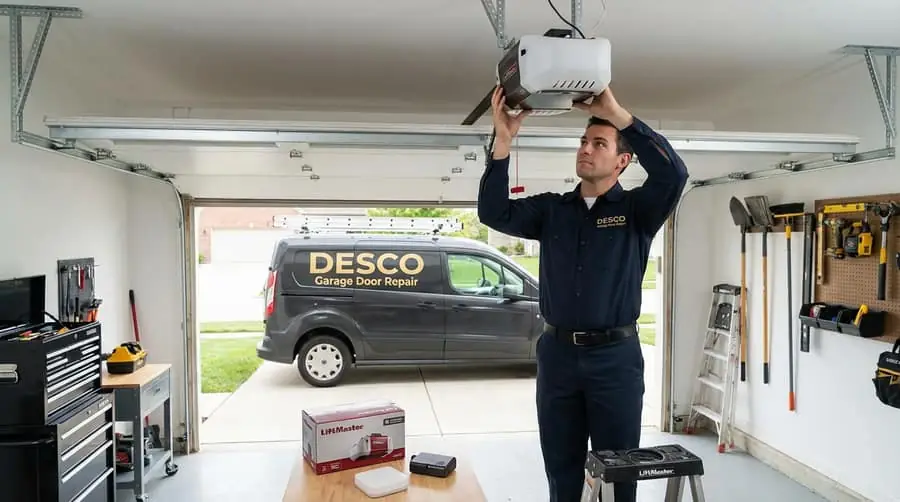
Quick answer: If your garage door won't close, begin with safe checks: confirm nothing blocks the sensor beam, clean sensor lenses, verify both sensor indicator lights are steady, and test wall control lock mode. If the door closes a little then reverses, opener force or travel limits may be incorrect, or the door may be encountering track resistance. If the door is off-track, visibly unbalanced, or has damaged spring/cable components, stop operating immediately and schedule professional repair.
Why a garage door won't close
A modern garage door is designed to refuse closing when it detects risk. That is a safety feature, not a flaw. The opener reads sensor input, travel distance, and resistance during every cycle. If anything looks unsafe, the system reverses or stops. Homeowners often see this as random behavior: the door goes down then returns up, closes only halfway, or ignores remote commands but responds at the wall button. In reality, these symptoms usually map to a specific subsystem such as sensors, travel limits, door balance, or control wiring.
In Massachusetts, weather adds another layer. Snow melt, humidity, salt, and freeze-thaw cycles can shift alignment, stiffen rollers, increase floor friction, and cause intermittent sensor signal quality. That means no-close problems are not always electrical and not always mechanical; they are often both. A reliable diagnosis checks the whole system in sequence. Desco Garage Door Repair in Stoughton, MA uses a safety-first process that identifies root cause before part replacement so homeowners avoid repeat calls and unnecessary costs.
Fast diagnosis table: symptom to likely cause
| Symptom | Most Likely Cause | Safe Check | Best Next Step |
|---|---|---|---|
| Door starts down then reverses | Sensor interruption or force limit issue | Check sensor lights, clean lenses, clear beam | If unchanged, schedule opener calibration at /garage-door-opener/ |
| Door closes partway then stops | Track obstruction, roller binding, or travel limit | Inspect tracks for debris and visible bends | Book system repair at /garage-door-repair/ |
| Remote will not close door but wall button works | Remote battery, programming, or lock mode | Replace battery, test lock/vacation mode | Reprogram remote or service control circuit |
| Wall button also fails intermittently | Low-voltage wiring fault or logic board issue | Check for loose wall station wiring if visible | Professional electrical diagnosis |
| Door shudders, scrapes, then reverses | Off-track roller or track misalignment | Look for roller out of rail, do not force | Service at /off-track-repair/ |
| Door is very heavy in manual mode | Spring imbalance or broken spring | Visual spring inspection from safe distance | Urgent spring service at /spring-replacement/ |
| Problem appears after freeze or storm | Ice bond, swollen seal, moisture-driven friction | Inspect bottom seal and floor edge | Use safe thaw and schedule tune if recurring |
Safety sensors: the #1 no-close trigger
Photo-eye safety sensors are installed near the floor on both sides of the opening. They communicate through an infrared beam. If the beam is blocked, misaligned, or electrically unstable, the opener will not allow full close travel. This prevents injury to children, pets, and property. Because these sensors are low to the ground, they are frequently bumped by bikes, bins, sports equipment, and snow shovels. Even a slight bracket shift can break alignment enough to cause repeat reversals.
Sensor problems can be obvious or subtle. Obvious issues include a blinking indicator LED or a visible object crossing the beam. Subtle issues include intermittent flicker caused by loose wiring, moisture at connection points, sunlight glare at certain times of day, or vibration from opener movement. Massachusetts garages with unsealed floors or heavy condensation often see seasonal sensor instability. If your door fails more often on wet mornings or after snow melt, sensor circuitry and bracket rigidity should be checked.
- Clean both sensor lenses with a soft, dry microfiber cloth.
- Confirm sensor lights are solid (not blinking) on both sides.
- Make sure no stored items cross the beam path near floor level.
- Check brackets for bends or looseness from impact.
- If indicators remain unstable, stop guessing and schedule service.
If sensors are clean and aligned but no-close behavior continues, the issue may be wiring integrity or opener board input processing. At that point, random adjustments waste time. A targeted opener and sensor diagnostic through /garage-door-opener/ can restore stable close cycles and verify auto-reverse safety before the job is complete.
Force limits and travel limits: small settings, big effects
Your opener uses force sensitivity and travel limits to decide when the door has reached the floor and how much resistance is acceptable along the way. If down-travel is set too short, the door may stop early and reverse because the opener thinks it met resistance too soon. If force sensitivity is set too low, normal friction from weather seals or cold rollers can trigger a false obstruction response. If force is set too high, the door may close unsafely before reversal, which is dangerous and non-compliant.
Homeowners often adjust these settings after replacing a remote, after a power outage, or when trying to solve a recurring nuisance reversal. Unfortunately, unstructured adjustments can mask the true root cause. For example, increasing force may temporarily hide track friction or spring imbalance while increasing wear on motor gears and door panels. Correct calibration always begins with confirming mechanical balance first. Then force and limit settings are tuned to safe values, followed by repeated cycle and reverse tests.
| Setting | Too Low Behavior | Too High Behavior | Proper Service Outcome |
|---|---|---|---|
| Down Travel Limit | Stops before floor, reverses early | Tries to push past floor contact | Stops cleanly at threshold with full seal contact |
| Down Force Limit | Reverses on minor friction | May close with unsafe resistance | Closes reliably and reverses correctly on obstruction test |
| Up Travel/Force | Struggles near top or stalls | Overtravels, stresses stops | Smooth open cycle without slam or overrun |
If your door closes when you hold the wall button but not on normal press, that strongly suggests sensor or opener safety input logic is involved. It does not automatically mean a bad motor. A professional tune-and-calibrate visit can quickly separate programming issues from actual component failures.
Track obstruction and physical binding
Garage doors fail to close when the path is not physically clear. Dirt buildup, small hardware fragments, dented track lips, worn rollers, and loose hinges can all create resistance high enough to trigger reversal. Homeowners may hear scraping, popping, or one-sided movement just before failure. If the door appears crooked, one roller is riding outside the rail, or a panel edge catches, stop operation immediately. Continuing cycles can bend more hardware and turn a moderate repair into a major one.
Massachusetts conditions increase binding risk through moisture-driven corrosion and winter grit tracked into garage thresholds. Even minor rust at roller bearings can raise friction enough to produce intermittent no-close behavior, especially in colder temperatures when lubrication thickens. A full track and roller inspection should include vertical and horizontal alignment, bracket torque, roller condition, hinge play, and cable wrap consistency at drums. If any roller leaves the rail, dedicated service at /off-track-repair/ is the safest next step.
Debris in Track
Small stones, dried mud, or broken hardware can interrupt travel enough to trigger opener reversal.
Bent Track Segment
A narrow pinch point creates sudden resistance and often causes jerking just before the door stops.
Worn Rollers
Flat spots or seized bearings increase drag and make close cycles noisy and unreliable.
Loose Brackets or Hinges
Shifting geometry changes door alignment under load and can cause repeated mid-close reversals.
Spring imbalance and why close failures happen
Many homeowners associate spring problems with doors that will not open, but spring imbalance can also prevent proper closing. An unbalanced door does not travel evenly in the tracks. That uneven movement creates friction spikes and vibration that opener safety logic interprets as an obstruction. You might see the door start down smoothly, wobble, then reverse near mid-travel. Another clue is that manual operation feels inconsistent: heavy in one section of travel and lighter in another.
A fully broken spring can also create no-close behavior if the opener cannot control descent safely or senses abnormal resistance. Do not attempt spring adjustment or replacement without training and specialized tools. Springs and cables store dangerous tension and can release violently. Professional spring correction at /spring-replacement/ includes proper pairing, tension balancing, and post-repair opener recalibration so the door closes predictably and safely.
Remote and wall control problems
Sometimes the door is healthy but command input is not. Remote batteries fail, memory is lost after power events, or wall control lock mode is accidentally enabled. If the wall station works but remotes do not, start with battery and reprogramming. If neither works reliably, inspect power first, then suspect control wiring or logic board instability. Intermittent control faults often feel random because they depend on vibration, humidity, or thermal expansion at connectors.
- Replace remote battery and test from close range.
- Check wall station for lock/vacation mode icon.
- Confirm opener outlet has steady power and no tripped GFCI.
- Test wall button and remote separately to isolate input path.
- If failures continue, book professional opener/control diagnostics.
Control-side faults are usually repairable, but repeated DIY resets can erase useful diagnostic behavior. If your opener lights flash codes or behavior changes day to day, document symptoms and request service through /garage-door-repair/ for a full system check.
Massachusetts weather effects on closing reliability
Weather in Massachusetts causes close-cycle issues more often than many homeowners realize. In winter, bottom seals can stiffen or freeze to damp concrete. During shoulder seasons, condensation can form on sensor lenses and wiring terminals. In coastal or high-humidity zones, corrosion accelerates in springs, rollers, and cable hardware. During storms, minor power quality fluctuations can upset opener logic boards. No single weather effect guarantees failure, but together they raise the chance of intermittent problems that are difficult to diagnose by trial and error.
The practical strategy is preventive, not reactive. Keep floor edges clean and dry when possible, inspect weatherstripping, schedule seasonal tune-ups, and address minor noises early before they become reversal events. If your door fails mostly during cold snaps or after heavy rain, mention that pattern during service scheduling. Environmental context helps technicians pinpoint causes faster and reduce repeat visits.
Safe homeowner checks vs professional repairs
| Task | Safe for Homeowner | Risk Level | Notes |
|---|---|---|---|
| Clean sensor lenses | Yes | Low | Use soft cloth only; do not force brackets |
| Remove visible track debris | Yes | Low | Only surface debris, no hardware disassembly |
| Replace remote battery | Yes | Low | Common no-close quick fix |
| Test wall lock mode | Yes | Low | Often enabled accidentally |
| Adjust opener force/limits | Sometimes | Medium | Only if manual allows and door is mechanically sound |
| Spring adjustment/replacement | No | High | Stored tension can cause severe injury |
| Cable/drum correction | No | High | Requires controlled release and rebalance |
| Track realignment with bent rails | No | Medium-High | Improper correction can worsen damage |
If you complete basic checks and the door still refuses to close, continued experimentation usually adds cost. Professional service can solve the issue in one visit by combining mechanical inspection, electrical testing, and safe opener recalibration. For immediate scheduling, use /book-online/.
What to do right now if your door will not close
- Stop repeated open/close attempts after one or two failed cycles.
- Clear sensor path and clean both photo-eye lenses.
- Check sensor indicator lights for steady alignment.
- Inspect tracks for visible obstructions or off-track rollers.
- Test wall station lock mode and remote battery.
- Look for weather-related floor resistance (ice, swollen seal, debris).
- If door is crooked, heavy, or noisy, stop and call a pro.
- Book service at /book-online/ for same-day availability when possible.
Desco local help in Stoughton and across Massachusetts
Desco Garage Door Repair is based in Stoughton, MA and provides no-close diagnostics, opener service, spring repair, and track/off-track correction throughout Massachusetts. Our technicians are trained to identify root causes quickly and complete repairs with full safety testing. That means the goal is not just to make the door move once, but to restore reliable daily operation in changing weather and real household use.
If your garage door won't close, call Desco at (339) 399-4119 or schedule online at /book-online/. Related service pages: /garage-door-opener/, /spring-replacement/, /off-track-repair/, and /garage-door-repair/.
Related Guides
More expert Massachusetts garage door resources from Desco.
Garage Door Repair Cost MA (2026)
Read guide →Spring Replacement Cost MA
Read guide →Repair vs Replace Guide
Read guide →Garage Door Won't Open
Read guide →Garage Door Making Noise
Read guide →Garage Door Off Track Guide
Read guide →LiftMaster Opener Repair
Read guide →Chamberlain Opener Repair
Read guide →Genie Opener Repair
Read guide →Frequently Asked Questions
Need Help in Massachusetts?
Desco Garage Door Repair — Stoughton, MA · Same-day service · Licensed & insured