
Repair vs Replace Garage Door in Massachusetts (2026 Guide)
A practical Massachusetts decision guide covering cost, age, safety, insulation, curb appeal, and long-term value for homeowners in 2026.
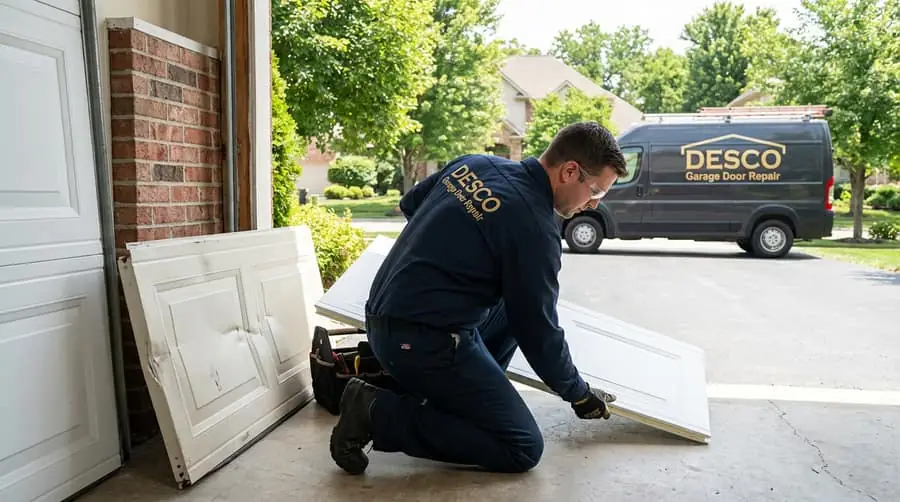
Quick answer: For most Massachusetts homeowners, the decision comes down to whether the current door can deliver safe, reliable operation for several more years without stacking repair bills. If the issue is a single failed part and the door is otherwise healthy, repair usually wins. If you are facing repeated failures, poor insulation, visible structural wear, or rising safety concerns, replacement is often the better financial and practical choice.
How to Decide: Repair or Replace in 2026
Many homeowners search for one simple rule, but the smartest decision is a weighted comparison of condition, cost, safety, and expected lifespan after the work is done. In Massachusetts, climate makes that comparison even more important because winter cold, moisture, and salt exposure can speed up wear in springs, rollers, hinges, cables, and bottom seals. A repair that looks cheap today can become expensive if another major part fails six months later. On the other hand, replacing a door too early can waste money if the structure and hardware still have strong life left.
At Desco Garage Door Repair in Stoughton, we help homeowners look at the full picture: immediate cost, likely follow-up costs, comfort and energy impact, curb appeal, and safety for the household. You can call (339) 399-4119 for a no-pressure assessment. This guide gives a practical framework so you can decide confidently whether to book targeted repair at /garage-door-repair/ or move toward full installation at /garage-door-installation/.
When Repair Makes More Sense
Repair is often the best value when damage is limited to one system area and the rest of the door remains in strong condition. Common examples include one broken spring, a cable issue caught early, an opener logic problem, misaligned sensors, or a single cosmetic panel problem with matching replacement parts available. In these cases, you preserve your existing investment and restore function quickly without the higher upfront cost of a complete replacement project.
Another strong reason to repair is timing. If you are planning broader exterior upgrades later, a high-quality repair now can safely bridge the gap and prevent emergency failure. The key is to verify that the door is structurally sound and balanced after the repair. If you need focused service, see /garage-door-repair/ for repair options and scheduling.
- The door is typically under 10 to 12 years old and has not needed frequent major service.
- The issue is isolated (for example one spring, one cable set, sensor alignment, or opener tune/repair).
- Door sections are straight, tracks are not severely bent, and the frame opening is stable.
- Repair cost is modest compared with replacement and expected to provide multiple years of reliable use.
- You can source matching components, especially for panel and hardware compatibility.
Panel Damage Is Not Always a Full Replacement Trigger
Homeowners often assume a damaged panel means the whole door must be changed, but that is not always true. If damage is localized and exact panel matching is possible, panel replacement can be a smart middle path that restores function and curb appearance at a lower cost. The deciding factors are compatibility, availability, and whether impact damage also distorted hinges, track geometry, or neighboring sections. For localized damage scenarios, visit /panel-replacement/.
When Replacement Is the Smarter Long-Term Move
Replacement usually becomes smarter when recurring repairs indicate a system reaching end-of-life. A garage door is an integrated mechanical system; when multiple major components fail in sequence, reliability drops and service frequency rises. Homeowners then pay repeatedly for labor, temporary fixes, and inconvenience. In these cases, replacement often reduces five-year ownership cost while improving daily operation, quietness, and safety performance.
Replacement is also worth serious consideration when insulation is poor and the garage is attached to living space. Massachusetts winters place a premium on better thermal control. Upgrading to an insulated modern door can improve comfort near adjoining rooms, reduce drafts, and lessen temperature swings around stored items and mechanical equipment in the garage.
Multiple Major Failures
If springs, cables, opener components, and panels are all showing wear, replacement often stops the cycle of repeated invoices.
Aging Door System
Doors around 15 to 20 years old frequently face parts availability issues and declining structural reliability.
Poor Insulation
Older non-insulated doors perform poorly in Massachusetts cold seasons compared to modern insulated options.
Safety Limitations
If sensor behavior, reversal performance, or manual operation safety is inconsistent, replacement can lower risk.
Curb Appeal Goals
A new door can dramatically improve frontage appearance when exterior updates are part of your home plans.
2026 Massachusetts Cost Comparison: Repair vs Replace
Price remains the first filter for most households, but it helps to compare scenarios instead of one isolated number. Typical Massachusetts repairs often land in lower three-digit ranges for isolated issues, while full replacement can start in the upper three digits and move significantly higher based on size, insulation, materials, and style. The challenge is that stacked repairs over 12 to 24 months can begin to approach replacement territory without giving you the long-term benefits of a new system.
If you want detailed statewide pricing context first, review /garage-door-repair-cost-massachusetts/. Then compare it against a replacement quote so you can evaluate true value, not just immediate out-of-pocket cost this week.
| Decision Scenario | Typical 2026 MA Cost Pattern | Usually Better Choice |
|---|---|---|
| Single major part failure, healthy door otherwise | Low to mid repair cost, little follow-up expected | Repair |
| Two major failures in same year | Repeated labor + parts begin to add up | Case-by-case, often replacement if aging |
| Three or more failing systems (springs/cables/panels/opener) | High cumulative repair spend over short timeline | Replacement |
| Older non-insulated door with comfort complaints | Repair may solve mechanics but not thermal performance | Replacement |
| Cosmetic panel dent with structural system intact | Targeted section replacement can be efficient | Repair (panel replacement) |
| Door over ~15 years with frequent service history | Repairs become less predictable and less durable | Replacement |
Use a 24-Month Cost View, Not a One-Invoice View
A helpful rule is to compare the expected total of likely repairs over the next two winters against the cost of replacement now. If likely repair spending approaches a large share of a new door project, replacement usually gives better reliability and lower disruption. This approach also captures hidden costs such as emergency downtime, schedule impact, and repeated service appointments.
Age of Door: Why It Matters More Than Most Homeowners Expect
Age alone does not force replacement, but age strongly affects risk. A well-maintained 10-year-old door may still be an excellent repair candidate. A neglected 16-year-old door with mixed hardware wear is a very different story. As systems age, tolerances drift, corrosion builds, and compatibility between old and new parts becomes more difficult. That often means each new repair has a higher chance of uncovering another weak point.
- Under about 10 years: repair is commonly cost-effective when failures are isolated.
- 10 to 15 years: evaluate history carefully; repair can still be smart with good structure.
- 15+ years with repeated service calls: replacement often provides better long-term value.
- 20+ years: replacement is frequently the safer and more predictable investment.
The practical takeaway is simple: age should influence confidence in repair durability. If confidence is low because multiple parts are near end-of-life, replacement becomes the safer budget strategy.
Multiple Failing Parts: The Tipping Point
The strongest predictor that replacement is smarter is not any one broken part. It is the pattern of failures. When households see a spring failure, then cable wear, then opener stress, then panel or roller issues, the system is usually signaling broader fatigue. At that stage, each repair may solve today problem but not next quarter problem. This is where many homeowners overspend by chasing reliability one invoice at a time.
Ask your technician to identify which components are currently safe, which are at moderate risk, and which are near end-of-life. A transparent risk map helps you choose between tactical repair and strategic replacement without guesswork.
Energy Efficiency and Insulation in Massachusetts Winters
Insulation is often underestimated in repair-vs-replace decisions, especially for attached garages. In Massachusetts, winter temperatures and wind exposure can make older non-insulated doors a comfort liability. While the garage may not be fully conditioned, cold transfer through poorly insulated door sections can affect adjacent rooms, floors above, and overall draft behavior around entry points. Weather seals and tune-ups help, but they cannot fully replicate the thermal performance of modern insulated door construction.
If your existing door is mechanically repairable but consistently underperforms in winter comfort, replacement may still be the better lifestyle and value choice. Improved insulation can reduce temperature swings, make the garage more usable, and support quieter operation due to stronger, denser panel construction. For homeowners comparing options now, begin with /garage-door-installation/ to review replacement paths and estimate ranges.
Curb Appeal and Home Value: The ROI Angle
Garage doors represent a large percentage of front elevation visual area on many Massachusetts homes, so appearance has real market influence. If you are planning to sell in the near to medium term, replacement can deliver both functional and visual benefits that basic repair alone cannot. Remodeling Magazine Cost vs Value reports have consistently ranked garage door replacement among stronger exterior ROI projects nationally. Actual return varies by neighborhood and home condition, but this category is widely recognized for value impact.
Repair preserves value when the door already looks good and only needs functional correction. Replacement creates value when the existing door is visibly dated, dented, faded, or architecturally mismatched with recent exterior upgrades. If curb appeal and resale are part of your goal, compare the visual outcome of repair against full replacement before deciding.
Safety: The Non-Negotiable Decision Factor
Safety should overrule short-term savings when a door shows critical risk indicators. Springs store high tension, cables carry substantial load, and auto-reverse systems must work consistently to protect people and property. If a door binds, drops unevenly, reverses unpredictably, or requires force to move manually, you should stop normal use and schedule professional service immediately. In some cases a repair restores safe operation quickly; in others, replacement is the safer and more dependable route.
- Never operate a door with frayed or broken lift cables.
- Do not ignore loud spring snaps, popping sounds, or sudden heavy manual weight.
- Treat failed safety sensors or inconsistent reversal as urgent.
- Avoid DIY work on tensioned components (springs, drums, cables).
- Request full post-repair safety testing before job completion.
Decision Checklist Table (Massachusetts Homeowners)
Use this quick checklist before approving work. If most answers land in the right column, replacement is usually the stronger long-term decision. If most answers land in the left column, repair often delivers better value now.
| Checklist Question | Repair Leans Yes If... | Replacement Leans Yes If... |
|---|---|---|
| Door age and history | Door is newer and has limited major service history | Door is older with frequent recurring repairs |
| Scope of current issue | Problem is isolated to one system area | Multiple major parts are worn or failing together |
| Structural condition | Panels/tracks/frame remain stable and true | Visible warping, repeated off-track events, or structural fatigue |
| Insulation and comfort | Current door meets comfort expectations | Winter drafts, large temp swings, and poor insulation persist |
| Safety confidence | System passes full safety checks after repair | Safety behavior remains inconsistent or unreliable |
| Two-year cost outlook | Projected repairs stay well below replacement cost | Likely repairs approach replacement-level spend |
| Curb appeal and resale plans | Current appearance still supports home goals | Door is dated or damaged and hurts street appeal |
| Parts availability | Matching parts are readily available | Parts are discontinued or difficult to source |
A Practical Decision Framework You Can Use Today
Start by asking for two written options: a repair-first quote and a replacement quote. Next, compare expected reliability for each option over the next 24 months, not just immediate invoice totals. Then factor in comfort, noise, safety confidence, and curb appeal priorities. Finally, choose the path that gives the best balance of cost control and predictable operation for your household.
If you are still unsure, booking an inspection is usually the fastest way to reduce uncertainty. Desco can evaluate your current system and provide clear next-step recommendations without pressure. You can schedule now at /book-online/ or call (339) 399-4119 to speak with our Stoughton team directly.
Desco Recommendation for Massachusetts Homes
Most homeowners make the best decision when they focus on reliability trajectory, not just initial price. We generally recommend repair when the door is structurally healthy, failures are isolated, and the expected post-repair lifespan is strong. We recommend replacement when repeated failures, poor insulation performance, and safety concerns point to higher total cost and disruption if you keep patching an aging system. Either way, transparent diagnosis and written options are the foundation of a good outcome.
Desco Garage Door Repair is based in Stoughton, MA and serves homeowners across Massachusetts with licensed, insured technicians. For help deciding between repair and replacement, call (339) 399-4119, request repair service at /garage-door-repair/, or review installation options at /garage-door-installation/.
Related Guides
More expert Massachusetts garage door resources from Desco.
Garage Door Repair Cost MA (2026)
Read guide →Spring Replacement Cost MA
Read guide →Garage Door Won't Open
Read guide →Garage Door Won't Close
Read guide →Garage Door Making Noise
Read guide →Garage Door Off Track Guide
Read guide →LiftMaster Opener Repair
Read guide →Chamberlain Opener Repair
Read guide →Genie Opener Repair
Read guide →Frequently Asked Questions
Need Help in Massachusetts?
Desco Garage Door Repair — Stoughton, MA · Same-day service · Licensed & insured